

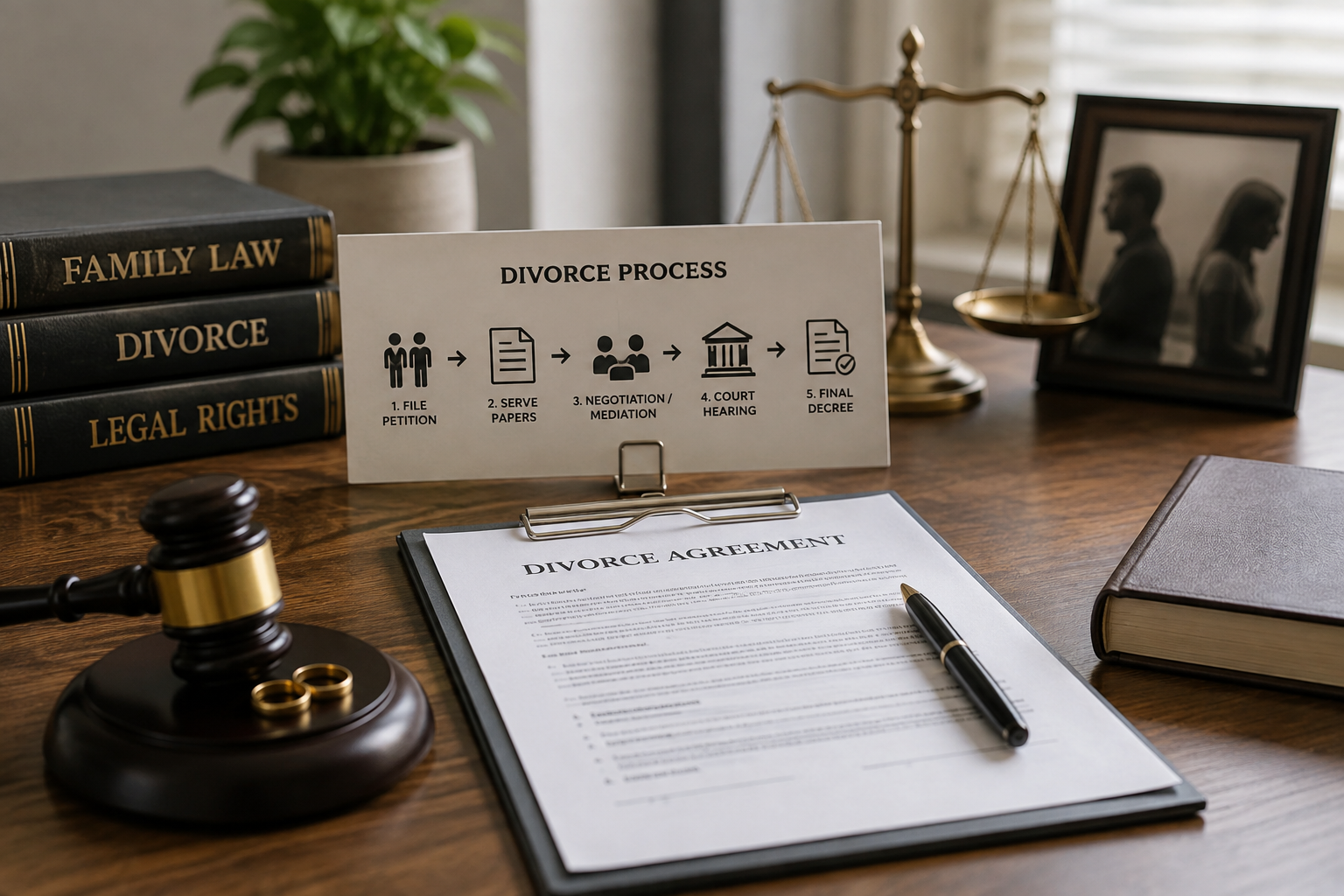
Divorce is a major legal and personal decision that can affect a person’s finances, living arrangements, children, property, and future plans. Although every divorce case is different, understanding the general divorce process can make the situation easier to manage and help people prepare for the legal steps ahead.
The divorce process usually involves filing legal documents, notifying the other spouse, addressing financial matters, deciding issues involving children, and obtaining a final divorce order. The exact requirements vary by jurisdiction, so anyone considering divorce should review the laws that apply to their location and consider getting advice from a qualified family law professional.
What Is Divorce?
Divorce is the legal process through which a marriage is formally ended. Once a court issues a final divorce order or decree, the spouses are no longer legally married.
A divorce may involve several separate issues, including:
- Division of marital property
- Division of debts
- Child custody
- Child support
- Spousal support
- Insurance and financial responsibilities
- Retirement accounts and other assets
- Future legal obligations
Some couples are able to agree on most or all of these issues. Others require negotiation, mediation, or court proceedings to resolve disagreements.
Step 1: Deciding to File for Divorce
The first step is usually making the decision to begin the legal process. Divorce can be initiated by one spouse even when the other spouse does not agree to the divorce.
Before filing, it can be useful to gather important financial and personal records. These may include bank statements, tax records, property documents, loan information, insurance documents, employment records, and information about retirement accounts.
People with children may also want to organize records relating to education, medical care, childcare, and other child-related expenses.
Preparing documents early can make the later stages of the divorce process more organized.
Step 2: Understanding Residency Requirements
Courts generally require a person to meet certain residency requirements before filing for divorce in a particular jurisdiction.
Residency rules can differ significantly. Some jurisdictions require a person to have lived there for a specific period before filing, while others have different requirements depending on the circumstances.
It is important to confirm the applicable requirements before submitting divorce paperwork. Filing in the wrong court or jurisdiction can cause delays and additional legal expenses.
Step 3: Filing the Divorce Petition
The formal divorce process generally begins when one spouse files a petition, complaint, or similar document with the appropriate court.
The filing usually identifies the spouses and provides basic information about the marriage. Depending on local law, the filing may also include information concerning children, property, support, and the reason or legal basis for the divorce.
The spouse who files is commonly referred to as the petitioner or plaintiff. The other spouse may be called the respondent or defendant.
After filing, the court assigns a case number and begins the formal legal process.
Step 4: Serving the Other Spouse
After the divorce case is filed, the other spouse generally must receive formal notice of the proceedings.
This is often called service of process. The purpose is to make sure the responding spouse knows that a legal case has been started and has an opportunity to respond.
The rules for service vary. Depending on the jurisdiction, documents may be delivered by an authorized process server, sheriff, or another legally permitted method.
Simply giving the documents to the other spouse may not always satisfy legal service requirements.
Step 5: Responding to the Divorce Petition
Once the responding spouse receives the divorce documents, they typically have a limited period to file a response.
The response may agree with the information in the petition or dispute some of it. The responding spouse may also raise issues involving property, children, support, or other matters.
Failing to respond within the required period can have serious consequences. In some cases, the court may proceed without the responding spouse and issue orders based largely on the information provided by the filing spouse.
Step 6: Temporary Orders
Some divorce cases require temporary arrangements while the case is pending.
Temporary orders may address matters such as:
- Where children will live
- Parenting schedules
- Temporary child support
- Temporary spousal support
- Use of the family home
- Payment of household expenses
- Use of vehicles
- Restrictions concerning certain financial transactions
Temporary orders are generally designed to provide stability while the divorce case is being resolved. They are not necessarily the same as the final terms of the divorce.
Step 7: Financial Disclosure
Financial information can play an important role in divorce proceedings.
Both spouses may be required to disclose information about their income, assets, debts, expenses, and financial accounts. The purpose is to give both sides and the court a clearer picture of the couple’s financial situation.
Relevant documents may include:
- Pay statements
- Bank statements
- Tax returns
- Mortgage records
- Credit card statements
- Investment account records
- Retirement account statements
- Business financial records
- Property documents
Accurate financial disclosure is important because hidden or incomplete information can create additional disputes and legal consequences.
Step 8: Child Custody and Parenting Arrangements
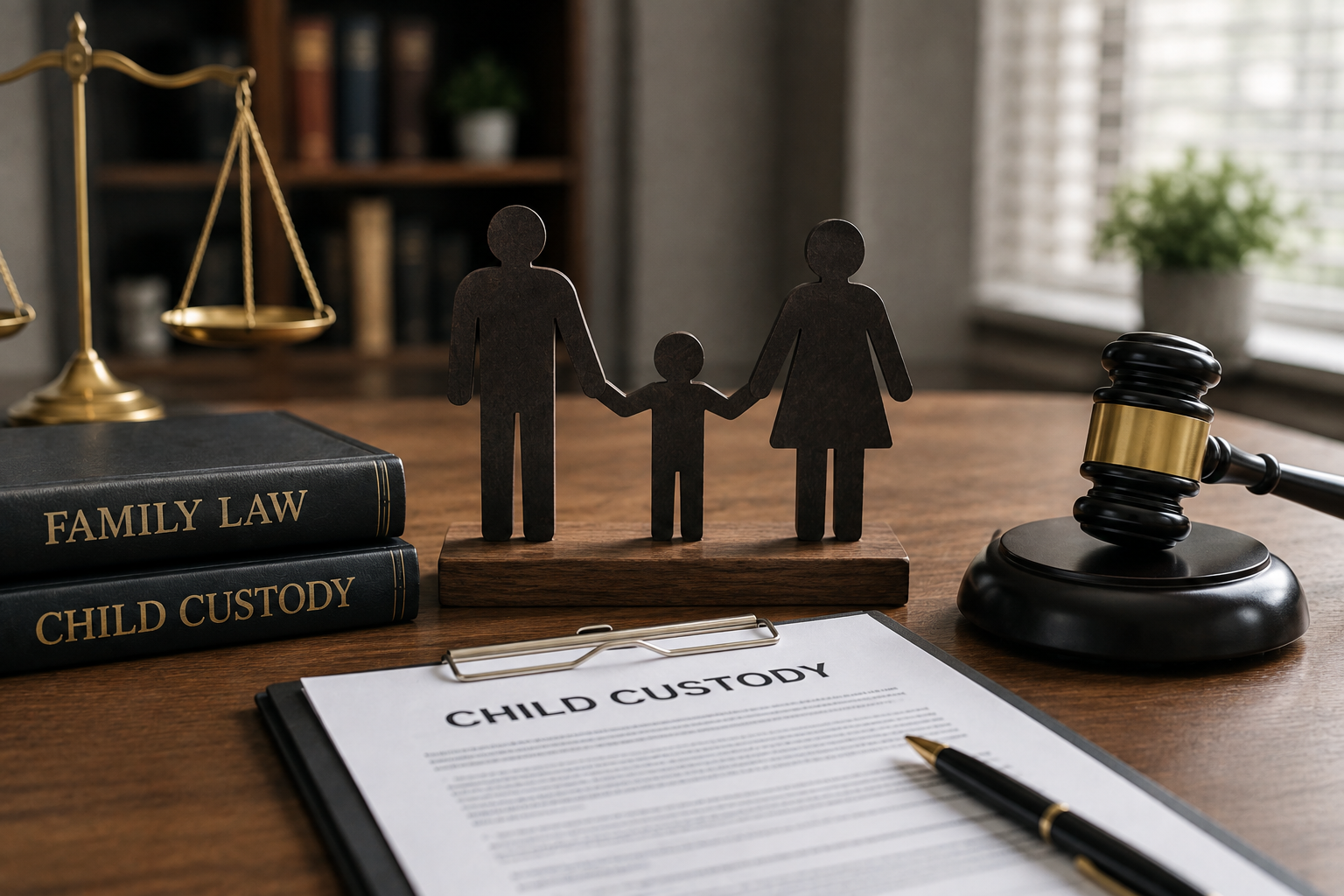
When children are involved, custody is often one of the most important issues in a divorce.
Child custody generally involves decisions about where children live and how parents make important decisions for them. Depending on local law, courts may distinguish between legal custody and physical custody or use different terminology.
Parents may create a parenting plan covering issues such as:
- Regular parenting schedules
- Holidays
- School breaks
- Transportation
- School decisions
- Medical decisions
- Communication between parents
- Travel arrangements
Courts generally focus on the best interests and welfare of the child when making custody-related decisions.
Step 9: Child Support
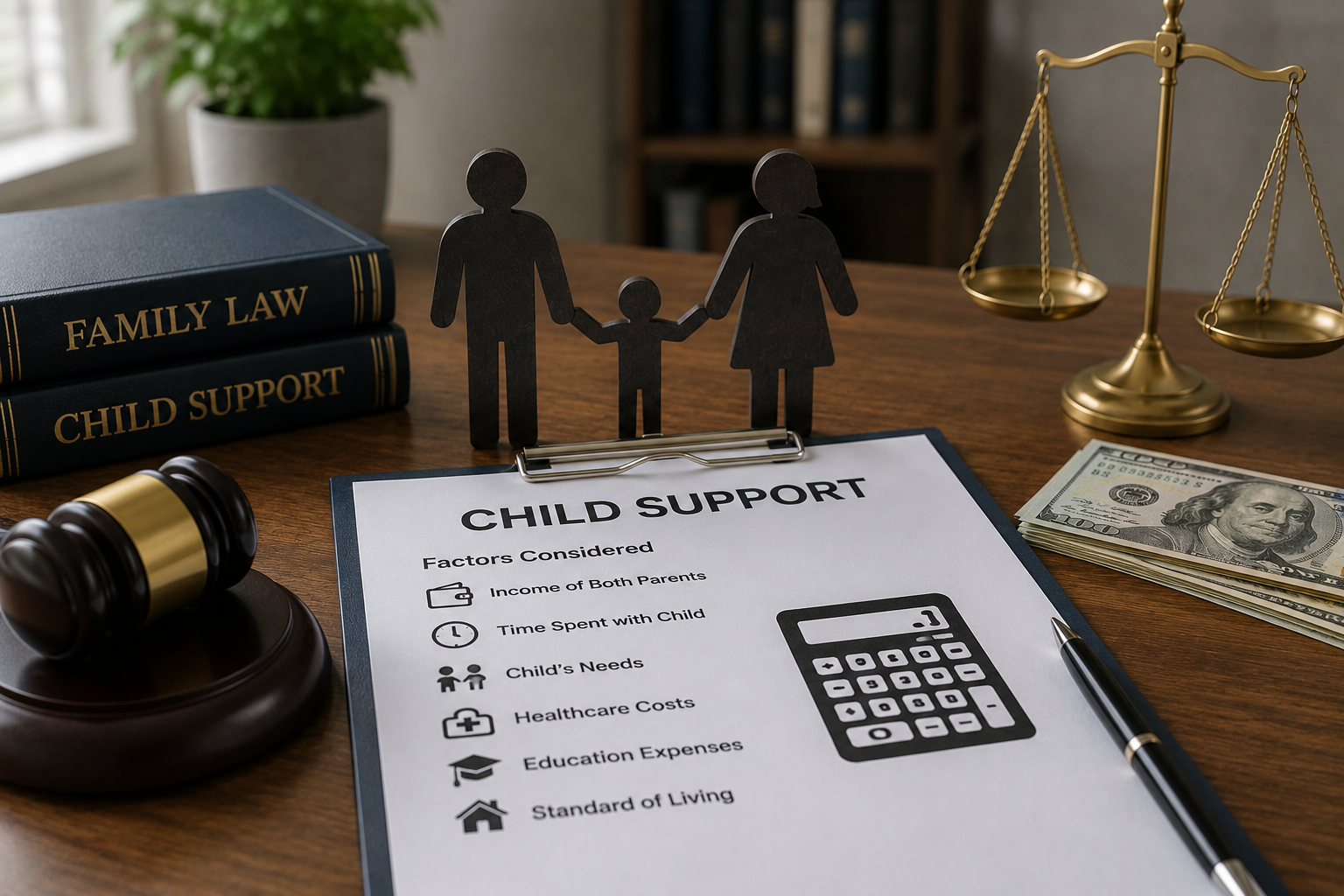
Child support is intended to help cover the costs of raising children.
The amount may depend on factors such as parental income, the number of children, parenting arrangements, healthcare expenses, childcare costs, and other factors established by applicable law.
Child support calculations vary between jurisdictions. Therefore, general online estimates should not be treated as a substitute for an official calculation or legal advice.
Step 10: Division of Property and Debts
Another major part of divorce is determining how marital property and debts will be divided.
Property may include:
- Homes
- Vehicles
- Bank accounts
- Investments
- Businesses
- Retirement accounts
- Personal property
- Other valuable assets
Debts may include mortgages, credit cards, personal loans, and other financial obligations.
Different jurisdictions use different approaches to property division. Some follow community-property principles, while others use equitable-distribution systems.
Because property laws vary, it is important to understand the rules applicable to the specific case.
Step 11: Spousal Support
In some divorces, one spouse may seek financial support from the other.
Spousal support may depend on factors such as the length of the marriage, each spouse’s income, financial needs, earning capacity, contributions during the marriage, and other legal considerations.
Not every divorce results in spousal support. Eligibility and calculation rules vary significantly by jurisdiction.
Step 12: Negotiation and Mediation
Many divorce cases are resolved without a full trial.
Spouses and their attorneys may negotiate an agreement covering property, debts, custody, support, and other issues.
Mediation is another common method of resolving disputes. A neutral mediator helps the spouses communicate and attempt to reach mutually acceptable agreements.
Mediation can sometimes reduce conflict, time, and legal expenses. However, it may not be appropriate for every situation, particularly where there are serious safety concerns or extreme power imbalances.
Step 13: Going to Court
If the spouses cannot reach an agreement, unresolved issues may need to be decided by a judge.
During court proceedings, each side may present documents, testimony, financial information, and other evidence.
The judge may then make decisions regarding disputed matters according to the applicable law and evidence presented.
Court proceedings can take considerable time, especially when the case involves complicated finances, business interests, property disputes, or disagreements about children.
Step 14: Final Divorce Judgment
Once all issues have been resolved, the court can issue a final divorce judgment, decree, or order.
The final document generally confirms that the marriage has been legally dissolved and establishes the obligations agreed upon by the spouses or ordered by the court.
Depending on the case, the final order may address:
- Property division
- Debt responsibility
- Child custody
- Parenting schedules
- Child support
- Spousal support
- Other financial or legal matters
It is important to carefully review the final order and understand the responsibilities it creates.
How Long Does Divorce Take?
There is no single answer to how long a divorce takes.
An uncontested divorce may be completed relatively quickly when both spouses agree on major issues and all paperwork is properly submitted. A contested divorce can take much longer.
Factors that may affect the timeline include:
- Court schedules
- Residency requirements
- Mandatory waiting periods
- Disputes over children
- Property disagreements
- Financial complexity
- Mediation
- Discovery
- Court hearings
- Settlement negotiations
People should avoid making major plans based on an assumed completion date until they understand the requirements of their jurisdiction.
Common Mistakes to Avoid During Divorce
Divorce can be stressful, and emotional decisions can create additional problems. Some common mistakes include hiding assets, ignoring court deadlines, making major financial decisions without understanding their consequences, using children as messengers, or communicating aggressively with the other spouse.
It is also important not to assume that verbal agreements are legally binding. Important arrangements should generally be properly documented and approved when required.
Another mistake is failing to understand the final divorce order. Once an order is entered, it can create enforceable obligations.
Do You Need a Divorce Lawyer?
Not every divorce requires the same level of legal assistance. Some uncontested cases may be relatively straightforward, while others involve complicated property, financial, custody, or support issues.
A qualified divorce lawyer can help explain applicable laws, prepare documents, negotiate with the other side, identify potential legal issues, and represent a spouse in court when necessary.
Anyone considering divorce should evaluate the complexity of their situation and determine whether professional legal assistance is appropriate.
Final Thoughts
Understanding the divorce process can help people prepare for the legal and financial decisions involved in ending a marriage. The process commonly includes filing a petition, serving the other spouse, exchanging financial information, addressing children and support, dividing property and debts, negotiating agreements, and obtaining a final court order.
The exact process depends on local law and individual circumstances. Because divorce can affect important rights and long-term financial responsibilities, people should use reliable legal information and seek qualified professional advice when appropriate.
A well-prepared approach can make the process more organized and help spouses focus on reaching practical solutions while protecting their legal interests.


Leave a Reply