
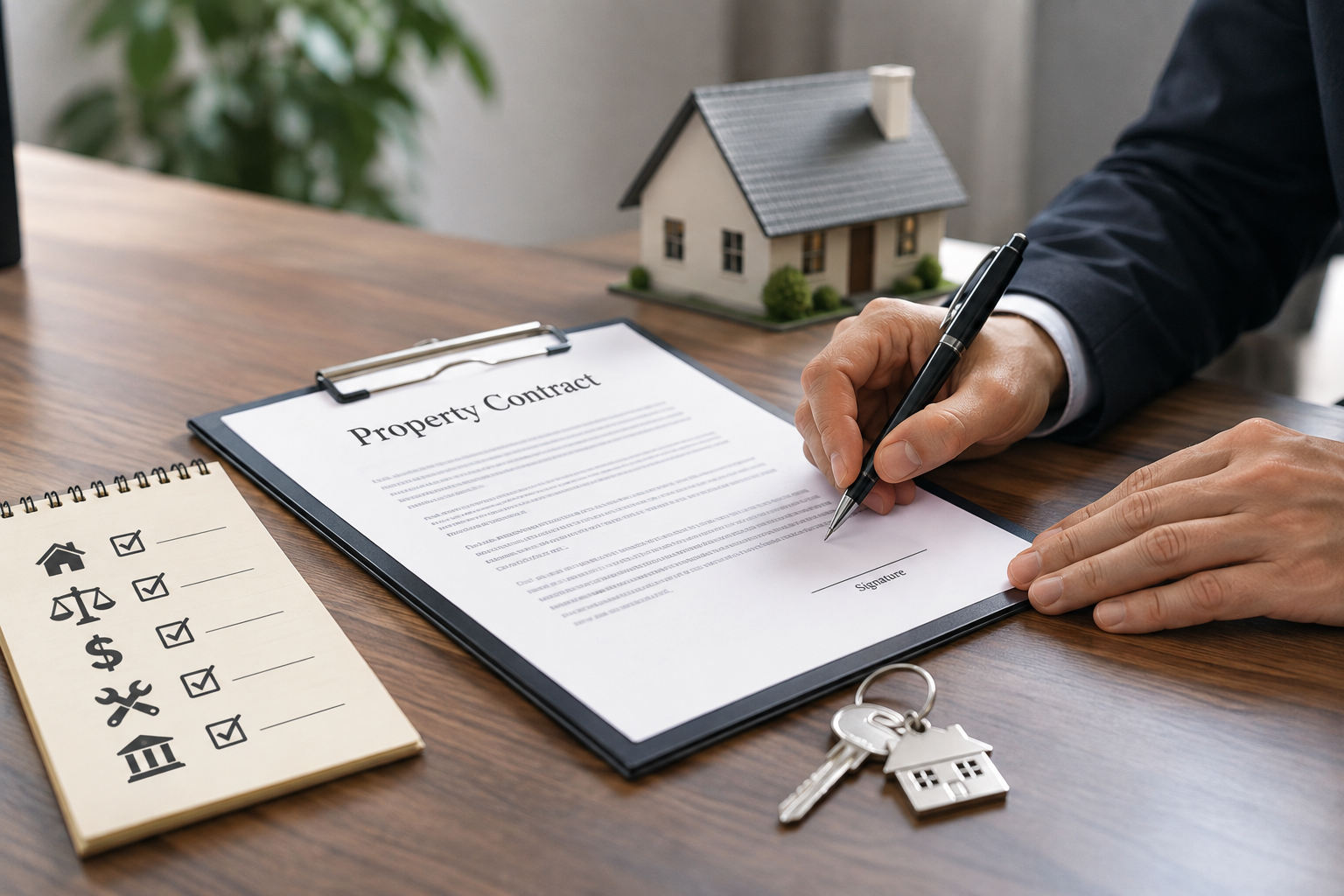
Buying, selling, renting, or transferring property usually involves a written contract. A property contract can create important legal and financial obligations, so signing without understanding its terms can lead to unexpected costs or disputes.
Whether you are purchasing a home, selling land, entering a commercial property transaction, or signing another type of real estate agreement, it is important to review the document carefully before committing.
Real estate laws vary by jurisdiction, and the legal effect of specific contract terms depends on local law. The information in this article is general and should not replace advice from a qualified real estate professional.
What Is a Property Contract?
A property contract is a legally significant agreement that establishes the rights and responsibilities of parties involved in a real estate transaction or arrangement.
Depending on the situation, a property contract may cover:
- Purchase and sale
- Rental or lease arrangements
- Property management
- Construction
- Development
- Co-ownership
- Property transfers
A purchase contract usually contains detailed information about the property, price, payment terms, closing arrangements, and conditions that must be satisfied.
Why You Should Read the Entire Contract
One of the most common mistakes people make is signing a contract without reading all of its terms.
A property contract may contain provisions that are not discussed during negotiations. These provisions can address deadlines, cancellation rights, penalties, inspections, repairs, disclosures, financing, disputes, and other matters.
Do not assume that an important promise is enforceable simply because someone said it verbally.
If a particular agreement matters to you, make sure it is properly included in the written contract.
Confirm the Parties
The contract should correctly identify everyone involved.
This may include:
- Buyer
- Seller
- Landlord
- Tenant
- Property owner
- Business entity
- Trustee
- Other authorized parties
Incorrect names can create problems, especially when property is owned by a company, trust, estate, or multiple individuals.
Make sure the person signing on behalf of an entity has the legal authority to do so.
Check the Property Description
The contract should accurately identify the property.
Depending on the jurisdiction, identification may include:
- Property address
- Parcel number
- Legal description
- Lot number
- Building information
- Unit number
Compare the contract with official property records when appropriate.
If the description is incorrect or incomplete, ownership and closing problems may arise.
Review the Purchase Price
The purchase price should be clearly stated.
Check whether the contract accurately reflects the amount negotiated by the parties.
Also review how the price will be paid.
The agreement may involve:
- Deposit
- Mortgage financing
- Cash payment
- Installments
- Seller financing
- Other payment arrangements
The timing and method of payment should be clear.
Understand the Deposit
Many property contracts require an initial deposit.
Before paying, understand:
- The amount
- Who holds the money
- When it must be paid
- Whether it is refundable
- When it may be forfeited
- Whether it is credited toward the purchase price
Deposit rules vary, so do not assume that the money is automatically refundable if the transaction does not close.
Review Financing Conditions
If you need a mortgage or other financing, carefully review any financing contingency.
The contract may establish deadlines for obtaining approval.
It may also specify minimum loan amounts, interest rates, or other conditions.
If financing is important to completing the transaction, the contract should clearly explain what happens if financing cannot be obtained.
Understand Inspection Rights
Property inspections can reveal problems that are not obvious during a normal viewing.
The contract may give the buyer a specific period to conduct inspections.
Possible inspection areas include:
- Structure
- Roof
- Plumbing
- Electrical systems
- Heating and cooling
- Pest problems
- Water damage
- Environmental conditions
Review what rights the buyer has if an inspection identifies significant problems.
Repairs and Property Condition
Do not assume that a seller is required to repair every problem.
The contract should explain whether repairs are:
- Required
- Negotiable
- Optional
- The buyer’s responsibility
- The seller’s responsibility
If the seller agrees to make specific repairs, those obligations should be documented clearly.
Understand “As-Is” Language
An as-is clause may indicate that the buyer accepts the property in its existing condition, subject to the terms of the agreement and applicable law.
However, an as-is provision does not necessarily eliminate all disclosure obligations or legal protections.
Buyers should understand exactly what the clause means under the applicable law before signing.
Review Seller Disclosures
Some jurisdictions require sellers to disclose certain known conditions.
Read all disclosure documents carefully.
Pay attention to information about:
- Water damage
- Structural issues
- Roof problems
- Previous repairs
- Pest issues
- Environmental concerns
- Insurance claims
- Other material conditions
Ask questions about anything that is unclear.
Check Title Information
Title determines legal ownership and can reveal claims or restrictions affecting property.
A title review may identify:
- Mortgages
- Liens
- Easements
- Ownership claims
- Restrictions
- Unpaid taxes
- Other encumbrances
A buyer should understand whether the seller can provide the required title at closing.
Understand Easements and Restrictions
An easement may give another person or entity certain rights to use part of the property.
Restrictions may also limit how the property can be used.
Examples include restrictions concerning:
- Construction
- Parking
- Access
- Landscaping
- Commercial activity
- Building modifications
These limitations can affect the property’s value and usefulness.
Review the Closing Date
The contract should identify the expected closing date or provide a process for determining it.
Closing may depend on financing, title work, inspections, document preparation, and other conditions.
Review what happens if closing is delayed.
Some contracts provide extensions, while others may establish consequences for failing to close on time.
Understand Possession
The date when the buyer receives possession should be clear.
In some transactions, possession occurs at closing. In others, the seller may remain temporarily under a separate arrangement.
The contract should explain when the buyer can take control of the property.
Know What Is Included
Buyers and sellers sometimes disagree about fixtures and personal property.
Items such as appliances, light fixtures, security systems, outdoor equipment, or other items should be clearly identified.
If an item is important to the transaction, it is better to list it in writing rather than rely on assumptions.
Review Closing Costs
Property transactions can involve many expenses.
Depending on the transaction, costs may include:
- Title services
- Recording fees
- Taxes
- Insurance
- Loan costs
- Appraisal fees
- Inspection fees
- Professional fees
The contract may determine who pays specific costs.
Understanding these expenses before signing can help prevent financial surprises.
Read the Default Provisions
A property contract should explain what happens if one party fails to perform.
Default provisions may address:
- Failure to pay
- Failure to close
- Failure to provide documents
- Failure to complete agreed work
- Other contractual violations
Possible remedies may include damages, cancellation, retention of deposits, or other legal remedies.
Review these provisions carefully because they can have significant consequences.
Understand Cancellation Rights
Do not assume you can cancel a property contract simply because you change your mind.
Cancellation may be allowed only under specific contractual or legal circumstances.
Possible cancellation rights may arise from:
- Financing failure
- Inspection contingencies
- Title problems
- Seller’s breach
- Failure of a required condition
- Other contractual provisions
Know the deadlines for exercising any cancellation rights.
Watch for Deadlines
Property contracts often contain multiple deadlines.
These may relate to:
- Deposits
- Inspections
- Financing
- Title review
- Disclosures
- Appraisal
- Contingencies
- Closing
Missing a deadline can result in loss of contractual rights.
Create a written schedule of important dates immediately after signing.
Be Careful With Verbal Promises
Verbal statements can create confusion.
A seller might promise to replace a roof, repair a fence, leave certain furniture, or complete another task.
If the promise matters, it should be included in the contract or an appropriate written amendment.
Written documentation provides much greater clarity about what the parties agreed to.
Understand Amendments
Property contracts can be changed after signing through written amendments.
An amendment may modify:
- Price
- Closing date
- Repairs
- Financing
- Included items
- Other contractual terms
Do not sign an amendment without reading it carefully.
An amendment can change rights and responsibilities established in the original agreement.
Review Dispute Resolution Terms
Some contracts explain how disputes will be handled.
Possible methods include:
- Negotiation
- Mediation
- Arbitration
- Court proceedings
The contract may also specify which jurisdiction’s law applies.
These provisions can affect how quickly and where a dispute is resolved.
Consider the Financial Consequences
Before signing, consider the full financial impact of the agreement.
The purchase price may not represent the total cost of owning the property.
Additional costs can include:
- Mortgage payments
- Property taxes
- Insurance
- Maintenance
- Repairs
- Utilities
- Association fees
- Closing costs
Understanding the overall financial commitment can help you make a more informed decision.
When Should You Get Legal Advice?
Professional legal review may be valuable when the contract is complex or the transaction involves significant financial risk.
Legal advice can be particularly useful when:
- The property has multiple owners
- The transaction involves a business
- There are title problems
- The property has unusual restrictions
- The contract contains complicated contingencies
- There is a dispute
- Seller financing is involved
- You do not understand important provisions
A qualified real estate lawyer can identify potential problems before you become legally committed.
Common Mistakes to Avoid
Before signing a property contract, avoid:
- Signing without reading the entire document
- Assuming verbal promises are included
- Ignoring deadlines
- Failing to inspect the property
- Overlooking title issues
- Ignoring closing costs
- Not understanding cancellation rights
- Signing documents you do not understand
- Failing to keep copies of the final agreement
Taking additional time before signing can prevent problems later.
Final Thoughts
A property contract can create important legal and financial obligations. Before signing, review the parties, property description, price, deposit, financing terms, inspection rights, disclosures, title provisions, closing arrangements, costs, deadlines, default provisions, and cancellation rights.
Do not rely solely on verbal explanations. If an issue is important, make sure it is properly documented in the agreement.
Real estate transactions can involve substantial financial commitments, and laws vary by jurisdiction. When a contract is complex or the consequences are significant, obtaining professional legal advice can help you understand your rights and obligations before signing.
A careful review today can help prevent expensive disputes tomorrow.






Leave a Reply