
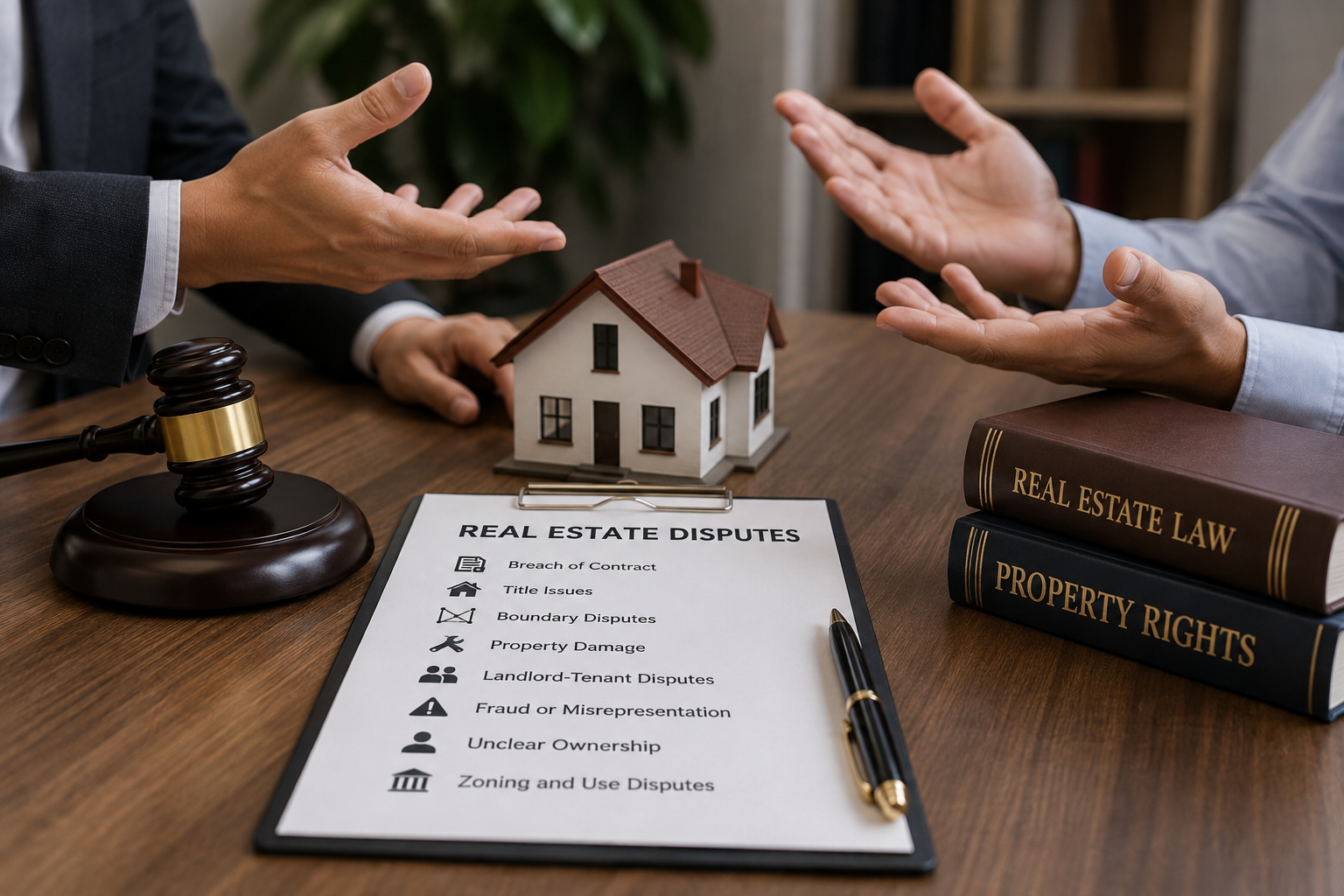
Real estate transactions and property ownership involve significant financial interests, which can sometimes lead to legal disputes. Disagreements may arise between buyers and sellers, landlords and tenants, neighbors, property owners, contractors, investors, or business partners.
Some property disputes can be resolved through negotiation or mediation, while others may require formal legal proceedings. Understanding the most common types of real estate disputes can help property owners and buyers recognize potential problems and take appropriate steps to protect their interests.
Real estate laws differ by jurisdiction, so this article provides general information rather than legal advice for a specific dispute.
What Is a Real Estate Legal Dispute?
A real estate legal dispute occurs when two or more parties disagree about rights, responsibilities, ownership, contracts, property use, or another issue connected to real property.
Real estate disputes can involve:
- Residential properties
- Commercial buildings
- Vacant land
- Rental properties
- Development projects
- Property boundaries
- Real estate contracts
- Construction work
- Ownership interests
The complexity of a dispute often depends on the value of the property, the applicable law, and the documents involved.
1. Property Boundary Disputes
Boundary disputes occur when neighboring property owners disagree about where one property ends and another begins.
A disagreement may involve:
- Fences
- Walls
- Driveways
- Buildings
- Landscaping
- Parking areas
- Other structures
Property deeds, surveys, maps, and official records may help establish the correct boundary.
A professional land survey may be necessary when existing records are unclear.
2. Easement Disputes
An easement gives a person or entity certain rights to use another person’s property for a specific purpose.
Common examples include rights involving:
- Roads
- Driveways
- Utility lines
- Water access
- Drainage
- Access to landlocked property
Disputes can arise when one party believes the easement is being used beyond its permitted scope.
The wording of the easement document and applicable property law are important in determining the parties’ rights.
3. Breach of Real Estate Contract
One of the most common real estate disputes involves an alleged breach of contract.
A buyer or seller may claim that the other party failed to meet contractual obligations.
Examples include:
- Failure to close
- Failure to make required payments
- Failure to disclose required information
- Failure to complete agreed repairs
- Refusal to transfer property
- Failure to meet contractual deadlines
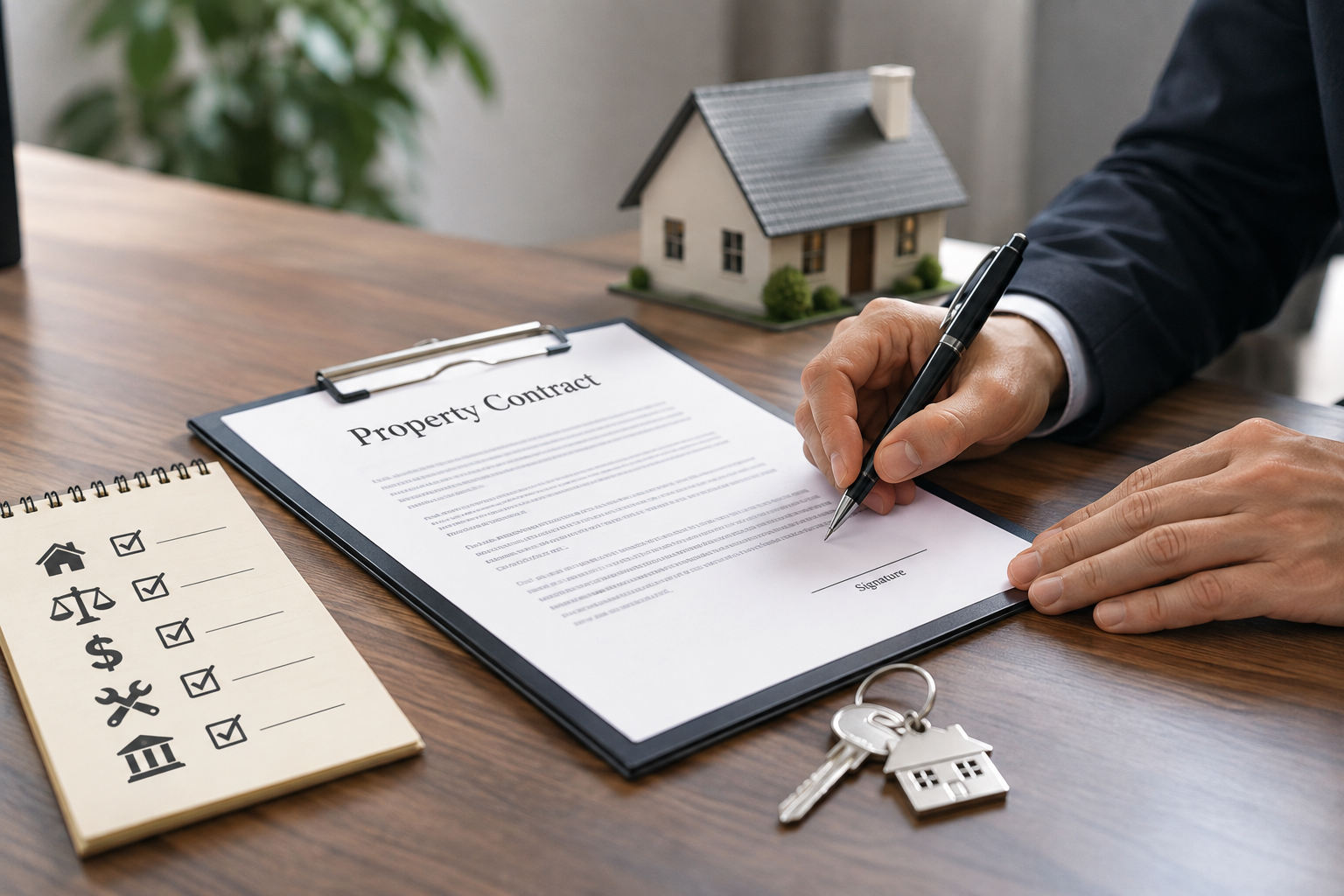
The purchase agreement should be reviewed carefully to determine what each party promised to do.
4. Seller Disclosure Disputes
Property buyers may sometimes discover problems after purchasing a property and believe the seller should have disclosed them.
Potential disputes may involve:
- Water damage
- Structural defects
- Roof problems
- Pest infestations
- Environmental conditions
- Previous repairs
- Other material property issues
Disclosure laws vary significantly. Not every defect creates legal liability, and the buyer may need to establish that the seller had a legal duty to disclose particular information.
5. Title Disputes
Title disputes concern the legal ownership of property.
Potential title problems may involve:
- Unknown liens
- Competing ownership claims
- Forged documents
- Inaccurate records
- Undisclosed interests
- Inheritance disputes
- Errors in property records
A title search can identify many potential issues before a transaction closes.
When ownership is disputed, legal proceedings may sometimes be necessary to establish the correct title.
6. Landlord and Tenant Disputes
Rental properties can generate disputes between landlords and tenants.
Common disagreements involve:
- Rent payments
- Security deposits
- Property repairs
- Lease terms
- Entry into the property
- Eviction
- Property conditions
- Utility responsibilities
Landlord-tenant laws can be detailed and vary by jurisdiction.
Both parties should keep copies of leases, payment records, notices, repair requests, and other relevant documents.
7. Security Deposit Disputes
Security deposits are another common source of disagreement.
A tenant may claim that a landlord improperly withheld a deposit. A landlord may argue that deductions were necessary because of unpaid rent, property damage, or other legally permitted expenses.
The rules governing security deposits often establish requirements for:
- Maximum deposit amounts
- Holding funds
- Inspection procedures
- Permitted deductions
- Return deadlines
- Written explanations
Because requirements vary, parties should review local landlord-tenant law.
8. Construction and Contractor Disputes
Real estate owners may have disputes with contractors over construction or renovation work.
Problems can involve:
- Delays
- Poor workmanship
- Unfinished work
- Cost increases
- Contract changes
- Payment disputes
- Building code issues
Written contracts are particularly important in construction projects.
A good contract should clearly describe the scope of work, payment schedule, deadlines, materials, change procedures, and responsibilities.
9. Zoning Disputes
Zoning laws regulate how land can be used.
A property owner may face restrictions concerning:
- Residential use
- Commercial use
- Building size
- Parking
- Signs
- Industrial activities
- Development density
A dispute may occur when an owner believes a zoning decision improperly restricts the use of property.
Zoning matters often involve local government agencies and administrative procedures.
10. Property Damage Disputes
Property damage can result in disagreements between owners, tenants, neighbors, contractors, or other parties.
Damage may arise from:
- Water leaks
- Fires
- Construction
- Trees
- Drainage
- Negligence
- Structural problems
Determining responsibility may require evidence showing who caused the damage and whether a legal duty was breached.
11. Neighbor Disputes
Neighbors can disagree about many property-related issues.
Common examples include:
- Noise
- Trees
- Fences
- Parking
- Drainage
- Property boundaries
- Construction
- Shared access
Some disputes can be resolved through direct communication or mediation.
When informal solutions fail, local property laws or court procedures may become relevant.
12. Homeowners Association Disputes
Properties governed by homeowners associations can create additional legal issues.
Disputes may involve:
- Association fees
- Property modifications
- Parking rules
- Maintenance responsibilities
- Fines
- Community restrictions
- Enforcement of association rules
The governing documents of the association can be important in determining the rights and responsibilities of property owners.
13. Foreclosure Disputes
Foreclosure can occur when a borrower fails to meet mortgage obligations and the lender seeks to enforce its security interest.
Borrowers may challenge foreclosure procedures when they believe the lender failed to follow applicable requirements.
Possible issues may involve:
- Incorrect payment records
- Notice requirements
- Loan modifications
- Procedural errors
- Ownership of the loan
- Other legal defenses
Foreclosure laws can be complex, and deadlines may be strict.
14. Real Estate Fraud
Real estate fraud involves deceptive conduct connected to property transactions.
Examples may include:
- False property information
- Forged documents
- Fake ownership claims
- Fraudulent loan applications
- Misrepresentation of property value
- Identity fraud
- Investment scams
Real estate fraud can result in civil liability and, in some circumstances, criminal consequences.
15. Co-Ownership Disputes
When multiple people own property together, disagreements can arise about how the property should be used or managed.
Co-owners may disagree about:
- Selling the property
- Renting it
- Repairs
- Mortgage payments
- Property expenses
- Improvements
- Distribution of income
A written co-ownership agreement can help establish responsibilities and procedures for resolving disagreements.
16. Inheritance and Property Disputes
Real estate can become a source of conflict after someone dies.
Family members may disagree about:
- Ownership
- Wills
- Trusts
- Property sales
- Beneficiary rights
- Estate administration
These disputes may involve both property law and estate law.
Clear estate planning can reduce the risk of future conflicts.
17. Real Estate Investment Disputes
Investors may face disputes involving partnerships, development projects, rental properties, or investment agreements.
Potential issues include:
- Ownership percentages
- Profit distribution
- Management decisions
- Financial reporting
- Property sales
- Contract obligations
Written agreements should clearly establish the rights and responsibilities of each investor.
How Real Estate Disputes Are Resolved
Not every property dispute requires a lawsuit.
Possible methods of resolution include:
Negotiation
The parties communicate directly or through their lawyers to find a mutually acceptable solution.
Mediation
A neutral third party helps the parties identify issues and negotiate an agreement.
Arbitration
An arbitrator may hear both sides and issue a decision when the parties have agreed to arbitration or applicable law requires it.
Litigation
If other methods fail, a party may file a lawsuit and ask a court to resolve the dispute.
The appropriate method depends on the contract, applicable law, and circumstances.
Evidence in Real Estate Disputes
Strong documentation can be extremely important.
Useful evidence may include:
- Purchase agreements
- Property deeds
- Surveys
- Lease agreements
- Emails
- Text messages
- Photographs
- Inspection reports
- Repair invoices
- Payment records
- Tax records
- Property notices
Keeping documents organized can help establish what happened and what each party agreed to.
How to Prevent Real Estate Disputes
Many disputes can be reduced through careful preparation.
Property owners and buyers should:
- Use written contracts
- Review documents carefully
- Obtain appropriate inspections
- Confirm property boundaries
- Conduct title research
- Keep financial records
- Communicate important agreements in writing
- Understand local property regulations
- Meet contractual deadlines
Professional legal review can also identify risks before a transaction is completed.
When Should You Contact a Real Estate Lawyer?
Legal assistance may be useful when a dispute involves significant financial value, unclear ownership, contract interpretation, title problems, foreclosure, construction defects, zoning restrictions, or potential litigation.
A real estate lawyer can review documents, explain legal rights, negotiate with the other party, and represent a client when formal proceedings become necessary.
Early advice can sometimes prevent a disagreement from becoming more expensive or difficult to resolve.
Final Thoughts
Real estate disputes can arise from contracts, property boundaries, leases, title problems, construction projects, zoning rules, ownership disagreements, and many other circumstances.
The best way to manage a dispute is often to understand the underlying documents, preserve evidence, communicate carefully, and address the issue before it escalates.
Negotiation and mediation may provide practical alternatives to litigation, but some disputes require a court or other legal authority to determine the parties’ rights.
Because real estate laws vary by jurisdiction, anyone involved in a significant property dispute should consider obtaining advice from a qualified real estate legal professional. Careful documentation and early attention to potential problems can make a major difference in protecting property rights and financial interests.




Leave a Reply